
Which one would you opt for?
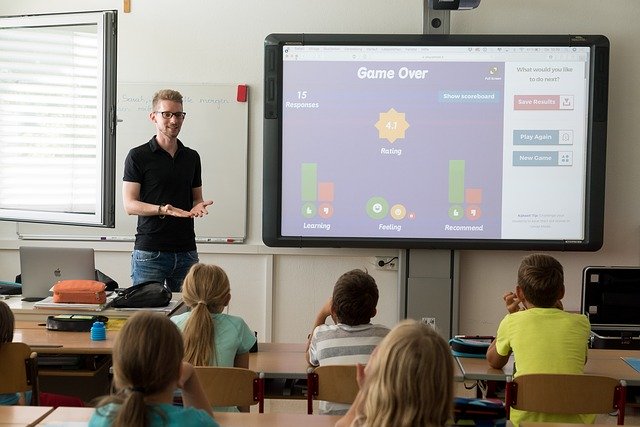

In this day and age with technological advances and other factors like the recent Covid 19 crisis worldwide, there’s a boom in online learning. This trend is likely to catch on all the more. But is it just a solution to resort to in challenging times like this or is it a practice that has a lot to offer and is worth staying on?
The truth is both online learning and classroom learning have their pros and cons. Which is the perfect choice depends entirely on the individual. That being said, we will explore further the differences between the two and what each has to offer. It is a question that seems to preoccupy people more and more these days.
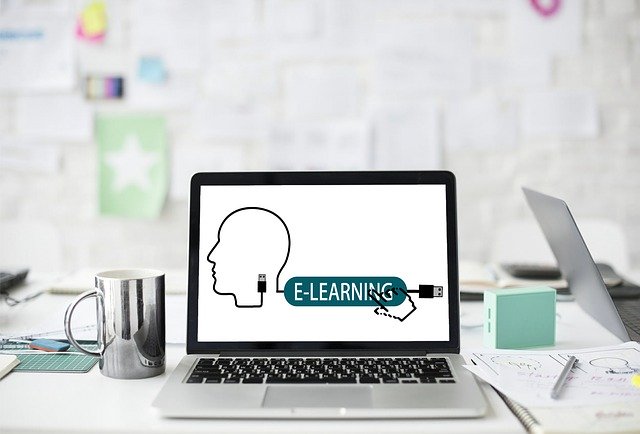
First of all, let’s begin by making clear that online education can take place in various ways; 1)through a self-paced mode which may not include live sessions with an instructor at all. 2) in a planned course with online content and materials at hand for study and live sessions with a tutor. This would mean a more controlled way of delivering learning and development quite similar to a face-to-face classroom teaching setting. The latter is usually most popular among younger age groups and will be the base for our comparison.

Why choose traditional Classroom Learning?
One of the strongest points in favor of face-to-face/traditional learning is that it takes place in a group with the presence of a tutor. This means there is constant interaction within the group and true bonding among the members. When learning in a group and through the daily interactions in the classroom students and tutors build relationships. These could develop substantially through the course of time. While this is undeniable, through peer collaboration and participation in online collaborative tasks and projects, relationships and bonds can develop in an online classroom setting as well. Moreover, participants can also develop intercultural competence, a necessary 21st-century skill as their peers may be from different cultural backgrounds.
Another point in favor of traditional classroom learning is related to student assessment. A lot of people feel traditional classroom learning offers the opportunity for reliable student assessment. This can be done through tests and quizzes, while the same is not so easy to accomplish in an online setting.
Why opt for e-learning?
Contrary to what some believe about the reliability of online assessment, the truth is that there are valuable analytic tools in present LMSs. They provide detailed reports and marking of a learner’s performance, so teachers can closely track a learner’s progress. And they can do so not only for the outcome, but also the time spent working on the platform and engaging with content, etc.
Apart from that, because modern online materials are designed to be intriguing and interactive as well as concise. Content is more engaging and easy to access on all kinds of devices. Studies show there is a higher retention rate. What’s more, the learner has more control over the way they can study and absorb the material. In some cases, they can study at their own pace. Then, there’s more flexibility and a wealth of materials at hand to explore. This is because there are no limitations in the content as is the case in a classroom face-to-face setting. And we should not underestimate the significance of collaborative learning that can take place in an online setting. Learners can participate in discussion forums, comment on content, share, attach media files, or access attached files of all kinds. These activities can make online sessions engaging and more productive than in a traditional classroom setting.
We should also bear in mind that, some of the participants often disrupt face-to-face teaching practice with their behavior. Additionally, it is often more difficult to get more individual attention when you need it. On the contrary, in an online setting distractions are minimized. Students find it easier to concentrate on what is on their screen. It is easier to get more personalized feedback as well. Having their mobile at hand can be distracting in some cases though.
Supporters of traditional classroom learning put emphasis on real human relations and interactions. They claim the classroom is the natural space where the learners can best develop their life skills and master knowledge. There is no doubt real-life social interactions are valuable.
Evidently that there is no clear cut answer to the dilemma.
Supporters of online learning on the other hand claim it is a more convenient way of education. That’s because you can practically study from everywhere as long as you have a reliable internet connection. This not only saves you the time of going back and forth, but it also brings down the barriers of physical distance. Obviously you spend no time commuting. You can study the subject of your choice no matter how far the institution that offers the course is. And it is worth adding that you will become more skilled in digital literacy at the same time. All because the use of technology is required for the delivery of the lessons and related tasks. Another factor to consider is the cost. Traditional classroom-based education is usually more expensive than online learning.
On the negative side though, is that it is often easier to find motivation when working in a classroom setting. In contrast, you need to keep motivating yourself in an online one, as there is often less social interaction. It may be easier to achieve self-discipline in a traditional classroom than in an online class. You feel more pressured to meet your deadlines. Of course, there are ways a tutor can tackle these problems; for example, by involving the learners in collaborative tasks and projects. Also by providing support through support forums created for the learners. Alternately, through interactions on social media where they can all be connected. Working in groups will help you keep yourself in track. Regular communication with the tutor and peers can keep you motivated throughout the course.

It may strike you as odd that a teacher views online learning so favorably.
Especially one who has had most of her experience in a traditional classroom. But having experienced both worlds , I can honestly say online education has a lot of potential and is very effective. And I say so even though my online experience is much less than the one of a traditional classroom teacher. It offers high-quality learning experiences to the learner. It does so in a very engaging way through the aid of a variety of tools. These are already at the tutor’s disposal and grow in number day by day, and a wealth of online resources. Needless to say, the tutor plays a key role in the success of online learning. The tutor should be well trained and passionate about their work. This is also a prerequisite for an effective traditional classroom learning experience as well.
To sum up, it is not primarily the mode that is of utmost importance. It is rather other contingencies related to the delivery of the lessons that play a vital role. It is the personal traits of each learner with their individual strengths and weaknesses that should be taken into account. These will help before making a decision and which will point to the right direction and preferable choice.
Perhaps the solution lies in blending the best of both practices in delivering outstanding classroom experiences. Taking into account the needs of the individual at a given time is the key to making our choice.
So what should you do?
Opt for whichever learning environment you feel is best for you! Be open to trying out new things and practices as there’s constant change in developments and needs.